
Memory of Totalitarianism: Hungary 2026
An international youth exchange exploring how fascism, Nazism, communism, and the events of 1956 continue to shape memory, democracy, and civic life in Europe.
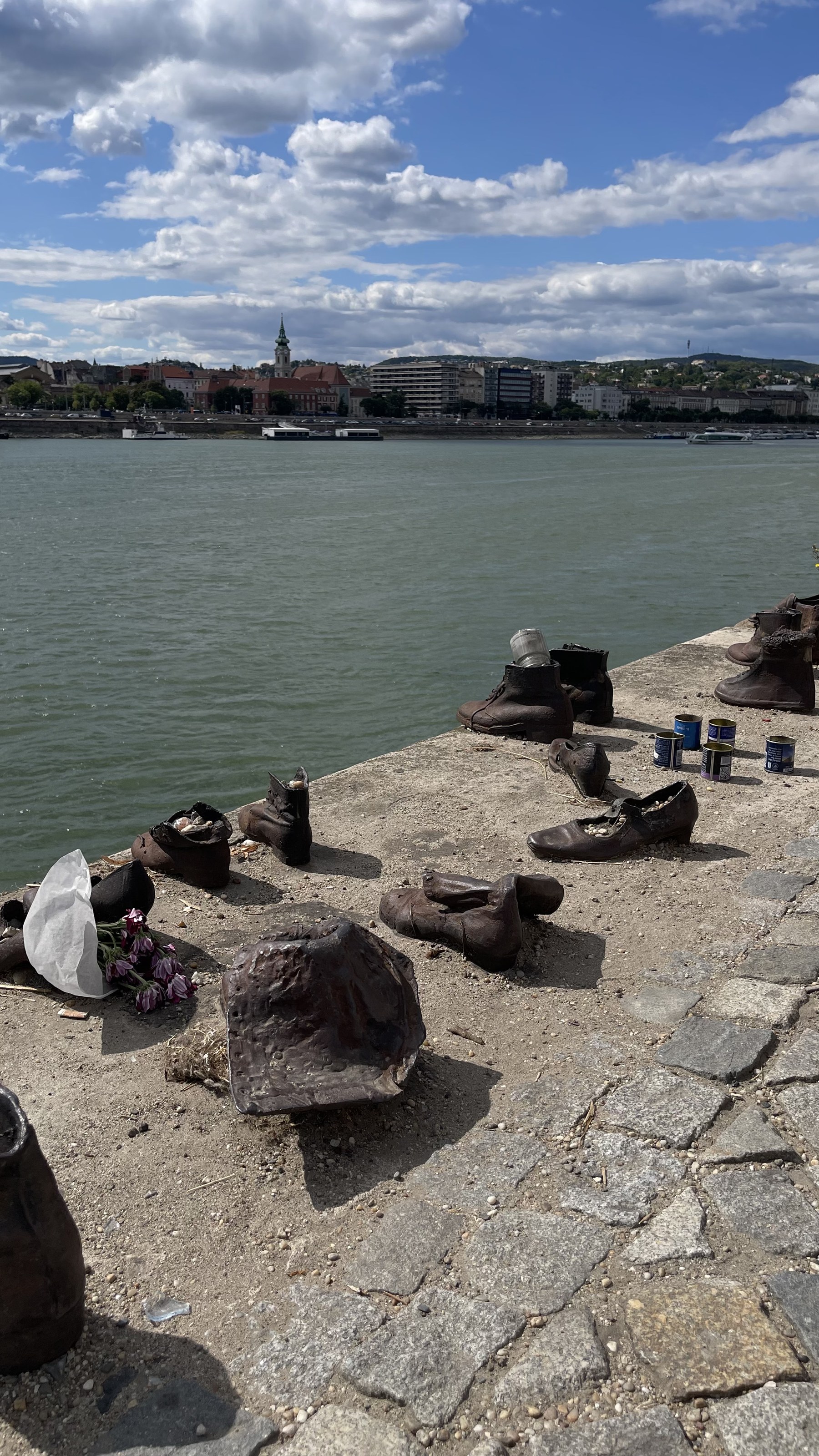
Learning from the past to strengthen the future
From 22 to 31 July 2026, I took part in the Hungarian edition of Memory of Totalitarianism as a participant in the Slovenian team, sent by Socialna Akademija. The exchange brought together young people from different countries to examine how fascism, Nazism, communism, and the 1956 Hungarian uprising are remembered—and why those histories still matter for democratic life today.
A geographical route through memory
Budapest was the base for a programme that also included visits to Recsk, Dunaújváros, and Sopron. Museums, memorials, historical sites, discussions, and workshops connected the periods of 1939–45, the 1956 Revolution, Goulash Communism, and the fall of the Iron Curtain in 1989.
The programme included the House of Terror, work on different cultures of remembrance, group reflection, team building, and the creation of a shared final output.
The Youthpass records a group of 26 participants from Germany, Hungary, Poland, and Slovenia. It confirms that the programme combined content-based workshops, group discussions, study visits, arts and crafts, and multidisciplinary group work. The activity was hosted by Kispesti Waldorf School, with Socialna Akademija, Kolegium Europy Wschodniej, and Volksbund Deutsche Kriegsgräberfürsorge e.V. among the partner organisations.
The Slovenian team
Participating through Socialna Akademija made the exchange part of a longer European programme built around historical memory, peace, dignity, and coexistence. Working in an international group made it possible to compare national narratives, question simplified versions of the past, and connect historical learning with responsibility in the present.
The final product
Francesco’s final contribution was The Last Witness: The Hands of Memory, a visual work set in Kossuth Lajos Square before the Hungarian Parliament. It connects three generations through an unbroken chain of joined hands, asking how lived memory can be passed on after the final witnesses are gone.
The accompanying article develops the idea behind the artwork and reflects on how the exchange connected historical sites, international dialogue, and responsibility between generations.
Documentation connected to this project.
Certificates and credentials provide a direct record of the learning, participation, and responsibilities connected to this work.
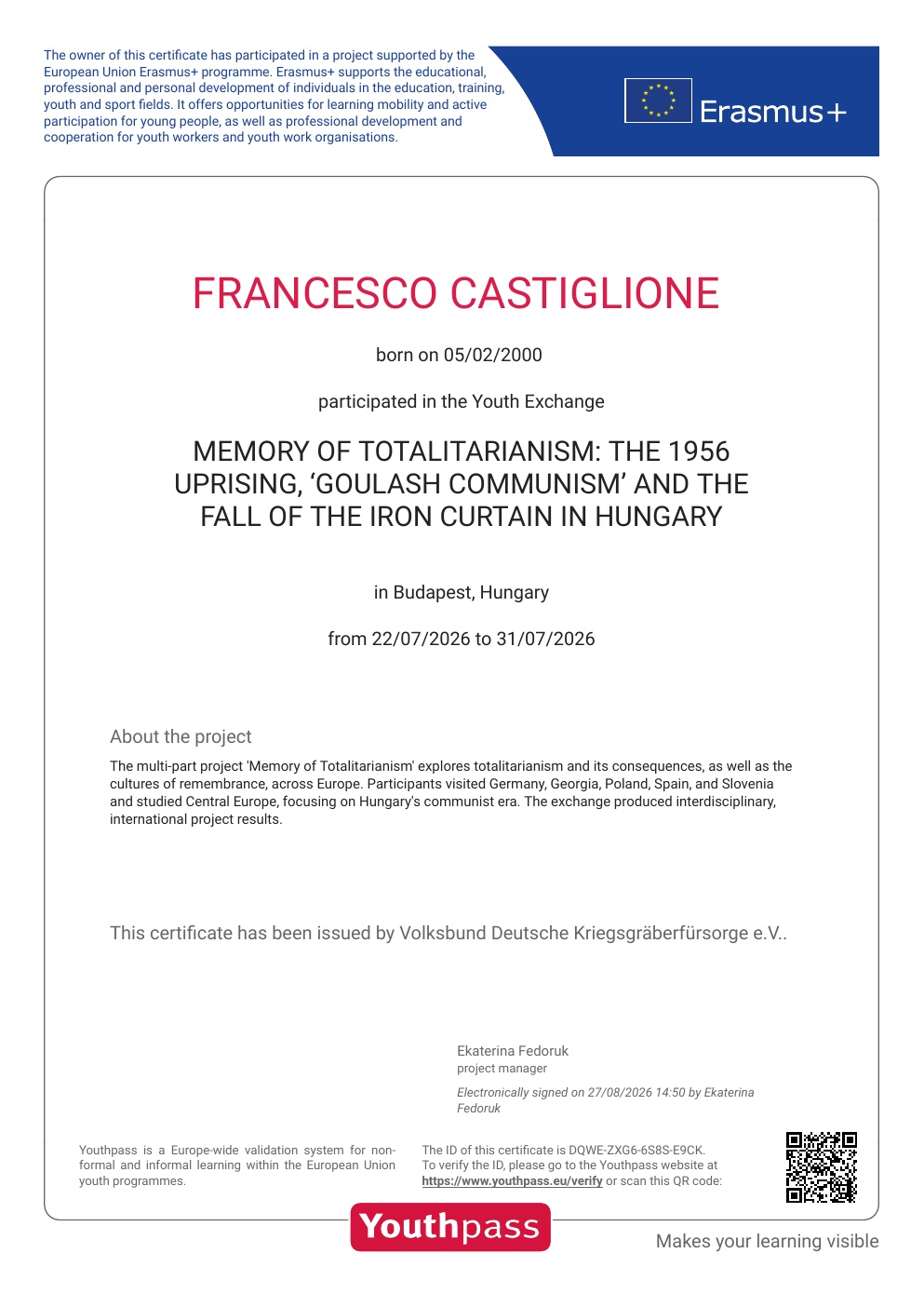
Memory of Totalitarianism Youthpass
Youthpass for an Erasmus+ Youth Exchange in Hungary exploring totalitarianism, the 1956 uprising, cultures of remembrance, and the fall of the Iron Curtain.
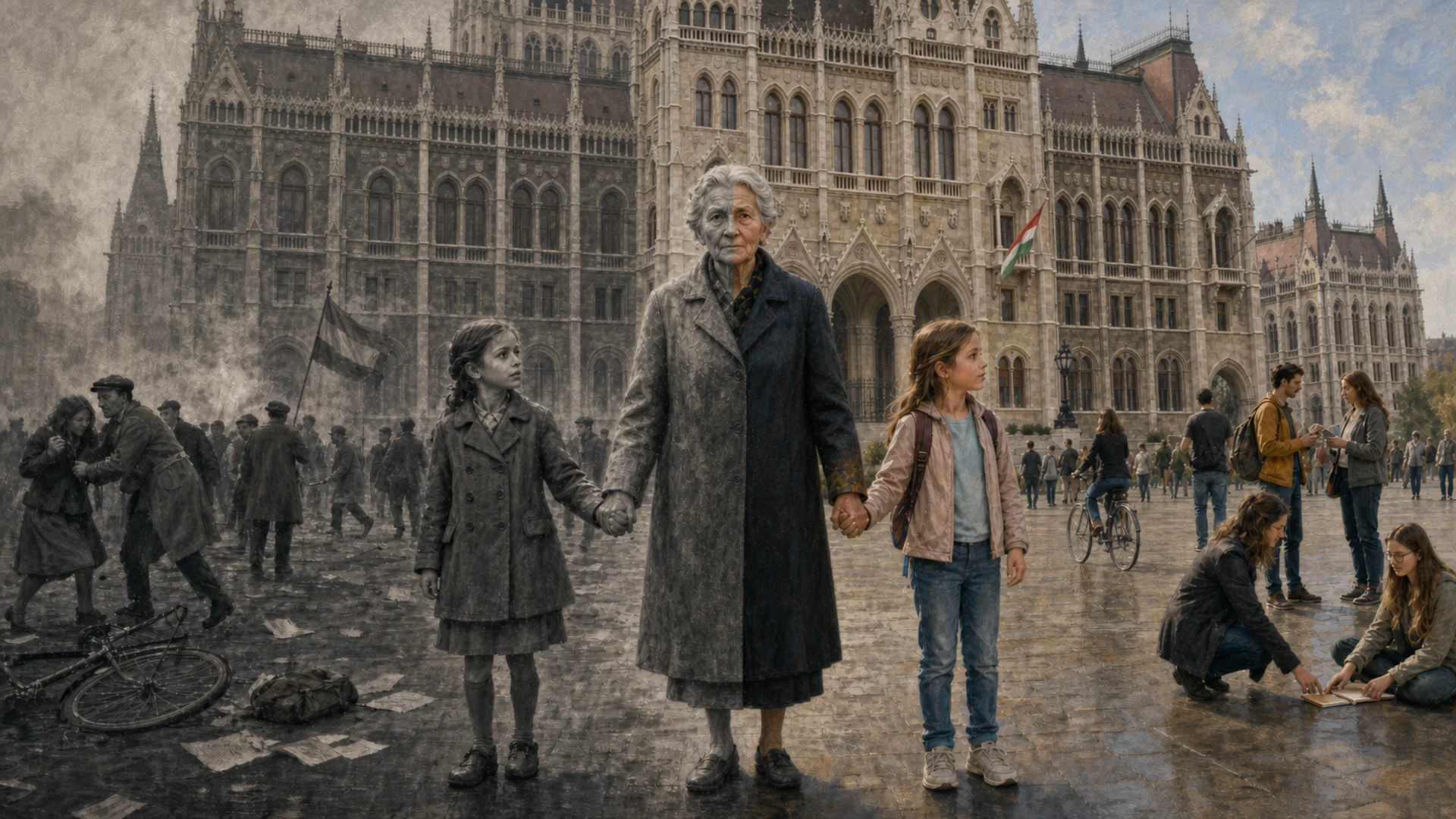
The Last Witness: carrying memory between generations
Reflections from Memory of Totalitarianism in Hungary, where historical sites, international dialogue, and a final visual project became ways of asking how memory survives.
Read article ↗